Saturday, November 12, 2011

Balanacan, Bantan and Romblon

Balanacan was about 52 miles from PG.   We followed a ferry in to the harbor and tried to anchor where the guide book suggested but things have changed.  For one not all the charts line up perfectly with the GPS so care must be taken when entering harbors.  The Philippines are reef strewn and they are sitting there ready to snare their next victim.   Which was us!!!    We shallowed up much more quickly than our chart showed and before we knew it we had nudged up onto the reef and couldn't get off.    Jim put the dinghy in the water and pushed us off.    We decided anchoring there was not a great idea as there were ferries coming and going and a diesel power plant upwind of us.    So we ventured into their sheltered lagoon and anchored in the middle.   A big statue of the Virgin Mary stands at the entrance to the lagoon.   At night all the little bancas come out to fish with their bright lights.   It was pleasant to sit in the cockpit and listen to the fishermen chat among themselves.    In the morning we woke up to larger bancas surrounded by small ones all working together to pull in nets.


Cruiser Notes:   Anchor in the lagoon, 13 32.2N; 121 51.9E

The next morning we made a short trip to anchor off the town of Bantan on Bantan Island.   Bantan is on the E side of the island and very open to any easterlies.  Our original plan was to go to the W side and anchor in Mainit Bay but then we read that it was volcanic, with hot water at low tide and we weren't too crazy about the possibility of having the galvanizing removed from our anchor and chain (which happened once before off the Island of Vulcano in the Aeolians, Italy).   The weather was very settled so it was possible then to anchor off Bantan town and we were glad we did.   This town is practically untouched by tourism.  The people here are excited to have guests and show you around.    There are no supermarkets, fuel stations, nothing here (except a cell phone tower), not even running water.    We were first greeted by a police officer who asked us to sign in their book and then took our picture.   Next, Lorenz offered to take us around the island on his motorcycle.    We made arrangements to meet him and his friend, Alnie, the next morning.

In the meantime another resident, Raffi, began guiding us around the town, taking us to the little fort from Spanish times and then to his home to give us some water and bananas.
The islanders do not have running water so water must be fetched daily from a number of wells.   It looks like a tough job to me.


The main industies are fishing and harvesting coconuts.

  Our tour on the motorcycles was great.   Lorenz and Alnie took us up into the hills where small villages (baranquays) lie nearly hidden by the foliage.    They are bigger than they look as there were several schools along the way to accommodate all the children.
We passed through Balogo and one of the villagers asked if we would like to see their "jar".   Some children had been exploring in the jungle, came across a cave and found this ancient jar, probably Chinese.
We rode on a network of "roads" which were little more than sidewalks that laced all over the island.  The road was cemented only a few years ago (the act of which provided income for the villagers).  Before it was a stone road and there were no vehicles, only walking.
Our guides showed us many beautiful beaches, stunning views and gorgeous blue, crystal clear water.  This is Mainit beach.

My favorite part of this trip was seeing the villagers in their natural setting just going about their daily lives.   We saw a woman chipping rocks, copra being weighed, a man building a new banca and shopkeepers by their stores.


Bantan will probably remain as one my favorite stops ever, due to the friendly people, the simplicity of life and the awesome beauty of the place.


Cruiser notes:   Anchor 12 56.760N; 122 05.886E.   No facilities, no fuel.   Anchor only in settled weather but don't miss this place if at all possible.

Romblon Island was just 20 miles from Bantan.   We were there early and while approaching the harbor, Dennis Shepherd, an ex pat Aussie, came zipping out in his dinghy to let us know there was a mooring available if we wanted it.   Anchoring in Romblon can be a little tough due to the depth.    The mooring belongs to a de facto yacht club, still being formed, which consists of...... this  mooring!!!    They charge only 100 pesos a day to be on it and they save the money for future moorings.   The mooring is held in place by a 2 ton slab of marble. This picture looks back at Bantan with its very own cloud.


 Romblon is known for its marble and marble is its major industry.     We met Oscar, a tricycle taxi owner and hired him to take us on a little ride around the area.    We basically just saw the views, local homes along the road and marble sculptors at work.


Romblon is actually off the tourist trail for the most part.    It does serve as home for a number of ex pats who have found Romblon to still be a part of genuine Philippine life.     Most of the ex pats are familiar with the Republika restaurant and the 5 o'clock happy hour.

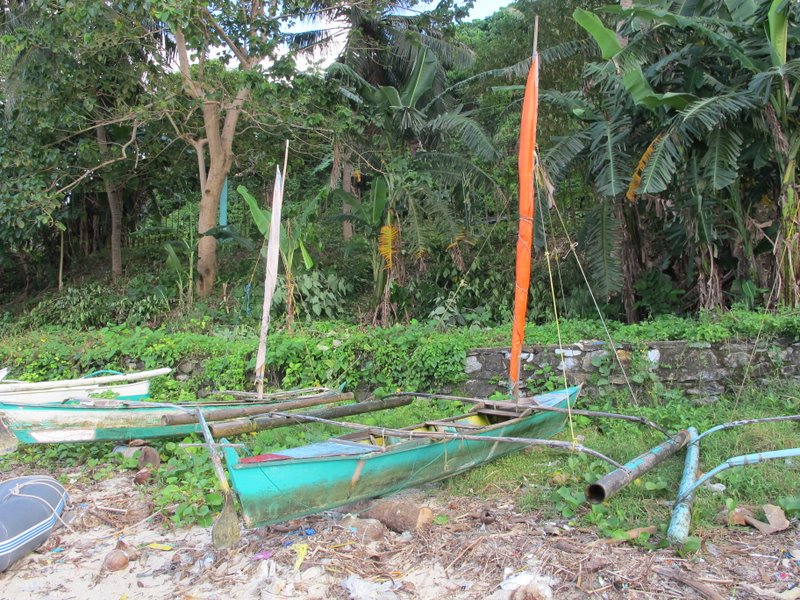
Mostly Romblon is just a laid back place where we enjoyed a slice of Philippine life.  Like kids on the beach (just waiting to jump in your dinghy when you aren't around) and bancas pulled out of the water.


The church dates back to the 1700's and is the centerpiece of the town.   While we were eating ice cream in the town square a priest and his taxi driver friends came up and surrounded us and we had a nice chat.  The priest told us all his ailments.  Then he asked how long we had been married.   We told him nearly 40 years, and the priest looked at Jim and said,  "God will reward you in heaven for sticking with her."    I think he meant it a little differently but we got a chuckle out of that one.


While we were on the waterfront, a banca came up with a squealing pig tied across it.   On its way to the market (the slaughterhouse was just down the road).


Other than that, it was mostly just life in a small town.  


Cruiser notes:    Mooring at 12 34.813N; 122 15.843E.    PO, fuel by tricycle taxi.   Market in town.   Bank often runs out of cash and will only exchange dollars, no other currency.  Laundry at the W corner of the town square next to the marble shopping center.   Good fresh bread can be bought at the Deli on the corner of the waterfront street and Republika and at Republika restaurant.

Punta Fuego and Puerto Galera

We finally left Subic Bay after 4 months of hard work.  It is great to be back to our cruising life again.    Our first stop was in Bananag Bay just 5 miles from the Subic Bay Yacht Club and a nice anchorage just to have a few hours to decompress.    In the morning we left for the 40 mile trip down the coast to Punta Fuego which is where the very wealthy Filipinos have 2nd homes and is an exclusive country club.    We anchored in front of their small marina and paid a visit.  When we asked about taking the shuttle up to the "hotel" we were told by the young woman that the hotel was a country club and the shuttle was for members only.   A man was standing next to her, Ed, , after just coming in on his boat, and told her they must welcome visitors and immediately sponsored us and told us we could have full use of the facilities.    He then got the marina manager, introduced us and put him at our disposal if we needed anything.   He also invited us to stay and asked us to join in their regatta that weekend.   After that we just decided to have a quick lunch at the seaside cafe and when we went to pay the bill found out that Ed had paid it already.    What a nice person and place and a great start to our cruise through the Philippine Islands.
Cruiser Notes:   Anchor location:  (14 07.7N; 120 35.4E)  Fuel dock and ice

Puerto Galera

Puerto Galera, a beautiful bay on the NE tip of Mindoro is a favorite spot for cruisers.   The bay is a UNESCO Biosphere site and voted one of the most beautiful bays in the world.    There is the delightful Puerto Galera Yacht Club which is very welcoming to cruisers.   You can anchor in the bay around the corner from Muelle Bay or pick up one of the yacht club moorings.    We just enjoyed the surrounds here and took a little tricycle trip into Sabang for an afternoon one day.     Puerto Galera is a bit more laid back than Sabang.   I took a tricycle trip to Talinapan Village which was 10 or so kilometers away and west of White Beach.    The village is a project started by the Ayala Foundation which builds native homes for the Iraya people coming down from the hills.     The homes are very basic, no electric or running water.  They have a community bath house and toilet and have a few community gardens.  While I was wandering around,  a man showed up in t-shirt, baseball cap, big camera and with a guide so naturally I thought he was a tourist.    I passed him and we started chatting.   Turned out he was Don Jaime Zoreb de Ayala himself, the wealthiest man in the Philippines, a billionaire a couple times over.  It was he and his wife  who started the foundation which supports the building of the houses in this village.
The Iraya people are known for their basket works which are unique, beautiful and very hard to resist.

Cruiser Notes:   Mooring:12 30.2N; 120 57.2E    Watch out for reefs!!    Mooring was 300 p per night which included use of the service boat, water, showers, and using the club restaurant.   Laundry in town on the main road just behind the waterfront, market down the hill into the main town.    Fuel by tricycle taxi.

Monday, October 31, 2011

Olongapo and Subic Bay

We arrived back in Subic Bay from the states in late June of this year (2011).   We began right away with the projects, a formidable list as always, and expected to be in the water and on our way within a couple of months.   Well, it took two months just to get back into the water, but the project list somehow never seemed to shrink, so we plodded on for another two months.    We improved our rudder, painted the decks, cleaned out all the bilges and painted them, installed shelves in lockers, installed a new toilet, shower sump, hot water heater, divider for the chain locker, removed all the old plywood from the aft cabin and installed new wood and made the bed a bit longer to accommodate Jim's long legs, installed some new electronic gizmos, notably an autopilot, and basically got the boat all cleaned and shiney and bright for her return trip home.


All the painting and polishing was done by Ed, our worker for the last 4 months.    He was amazing, always looking for something to do in between tasks, never stopped working while "on the clock".   We hated to let him go when we left.

Olongapo is a busy town which used to be filled with young Navy men during the Vietnam war era but now is filled with young Filipinos going about their daily lives.    Whenever we did business with them they were eager to be friendly with us and know a little something about our lives.    Doing business can be very frustrating.  There is definitely a difference between Filipino time and American time as we learned.    Patience isn't just a virtue here, it is absolutely necessary.     Even so, we easily accomplished daily tasks, like filling up our phone card:


Picking up laundry:


Getting some courtesy flags made by the slowest tailor in town.    It took me 10 visits and more than two weeks to get her to complete the flags she said would be done in 4 days.    She had every excuse in the book.  In the end I had to sit right next to her machine and watch her as she finished the flags.  Even then it almost didn't happen as while I was there I could smell something burning, a real danger in a crowded market.   The electric fan exploded into flames next to me, while a lit cigarette burned a hole in another client's order.


Jim found a paint shop not too far from our boat.    They didn't have color charts or computer mixing machines.  You just brought in a sample of the color you wanted, and the mixer would drop a little of this and a little of that into the can and voila you would have your can of paint and the color would be right.


Don't tell the authorities, but we could buy DVD movies here for 35 pesos (less than a dollar) and a whole year of a TV series for 50 pesos.    They had everything as soon as it hit the theatres.    Quality   was hit and miss, sometimes the movies were clumsily filmed in a crowded theater and you can here the popcorn crunching and cell phones going off in the background.    Sometimes the shilouette of a head goes by the screen and sometimes the whole thing goes dark as the video thief covers his camera to avoid being discovered.


One of the reasons we stayed so long in Subic was because of the SW monsoon.  This year's monsoon was stronger than usual and dumped a lot of rain.    While we were on the docks at Watercraft Venture Typhoon Nesat came roaring right up the bay.    We were a dead hit and although the winds weren't particularly high, 40 knot to gusting around 60, the waves broke up the fragile and unprotected docks.   Fortunately we had already moved to the yacht club, just a few yards away, but protected behind the drydocks.
As you can see, there was nothing to go back to after the storm, so we stayed at the Yacht Club for the next month, a bit of an upgrade for us.

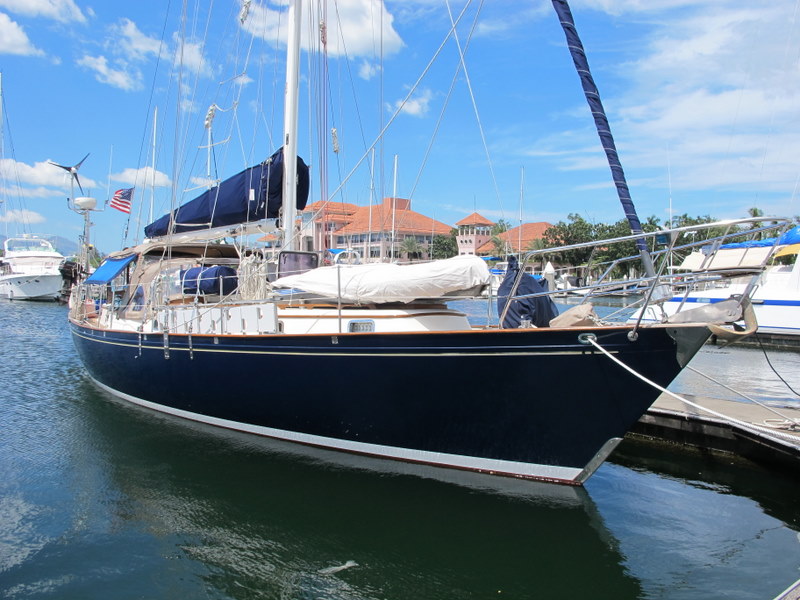
We enjoyed our time in Subic, but we were chomping at the bit to get moving again.  Finally in late October the wind direction changed, the monsoon laid down and we prepared to leave.    We still will be in the Philippines for another month or so as we make our way through the Visayas.   Right now we are anchored just outside of the small marina at Punta Fuego, where the rich people live in beautiful homes overlooking the South China Sea and some small islands.    We especially like the Filipino people, the real people, like Ed, Rona our laundry gal, who work for peanuts just to survive.    There's hope for their future, though.   I met this likable young fellow, Gabe, in the market one day and he told me his dream which was to grow up and help to feed the people who were poorer than he was and help everyone build a home.

Tuesday, October 18, 2011

Flashback #2 - Mali: Timboktu

Yes Virginia, there is a Timboktu and it is in Mali.     It's a big difficult to get to so we chose to ride the ferry boat from Mopti to a landing near Timboktu.    The trip would start on the Niger river bank in Mopti.    Jim was laid out with his turn to deal with the African trots, so Erin and I went down to check on the "reservation" which was for a lst class cabin on the upper deck of the ferry.    When we got there, we discovered that our reservation had been sold out from under us upstream and our only choice now was to sleep on the decks with all the other travelers.    Not bloody likely!!!    Erin got to work and we walked along the stream until we found a pinasse that was heading back down river toward Timboktu.    Great news, the pinasse would sell us space.   Erin was careful to indicate that we wanted our own benches and got two other groups of western travelers also left stranded by the ferry to go in on the pinasse with us.    The idea was to not be crowded in by locals for the 3 day trip.    Well as soon as the lines were let off, a mad dash by bystanders on the river bank resulted in the pinasse being filled up with local travelers.    We westerners howled our discontent and the loading stopped but only after about a dozen additional travelers had boarded.  It was going to be a hot, 3 day trip, sleeping on the river banks at night and we did not want to be squashed for the duration.

We would stop along the way at small river villages to buy a fish for dinner.    We were always mobbed by the villagers curious about the westerners traveling on the river.


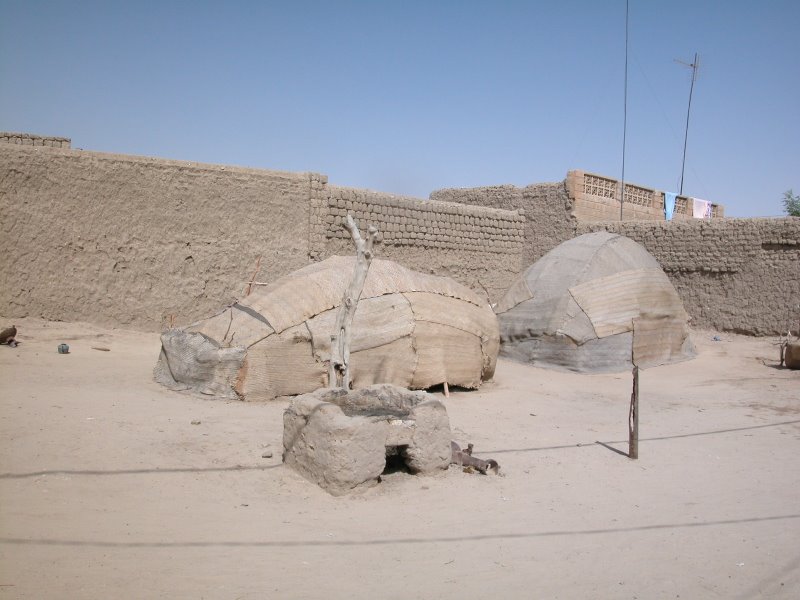
At the end of the 3 days, we arrived at a port which was still about 10  miles from Timboktu, so we hired a van to take us into town and then we all split up looking for lodging for the next couple of nights.    Erin had organized rooms for us in an old caravanserie.   It was a bit dreary so on our walk through town we discovered a brand new hotel had opened up and we moved the next morning.    While having our breakfast we were hounded by Tuareg salesmen.   Finally, we promised one we would go see his "shop" after we had made our move.   His shop was actually just his home which was a berber hut on the outskirts of town.


The ritual inside the hut was to first have tea, their version being a sugary concoction, and then get down to bargaining.    They showed us their stock, mostly a few pieces of jewelery, and we would bid, then everyone would laugh at each other (asking too much, bidding too low) until an agreement was made.  We actually had a good time with these guys.

We acquired a guide and walked around town.    Here is the door to a mosque.


Timboktu actually translates to Boctou's Well.   This is it, supposedly.  At one time, the only well for hundreds of miles.     Our guide took us to a museum where we could see on display some very old Korans and even more interesting for us sailors, an ancient disk used to navigate caravans across the desert by the stars.


Kids at the war memorial in Timboktu.  Note the lighter skin colors and more Arab features on some of these children.  The girl in the red top is a beauty.

We took a camel ride into the desert, which really was a shopping trip cleverly disguised as a camel ride. But it was fun nonetheless if not a bit uncomfortable.    The saddle horns were spike shaped and dug in with every lurch the camel made.     This closed out our journey to Mali.  A quick plane ride (in an antiquated Russian prop plane which had me wondering where I had last seen my rosary) back to Mopti and another journey back to Bamako where a new hotel and nice swimming pool and a bottle of wine were waiting to round out our stay in Mali.